Asphalt is forgiving right up until it is not. It puts up with heat, cold, traffic, and the occasional overloaded truck. It sheds water, flexes under turning tires, and hides small sins in the base. Then something changes. Chip seal A few hairline cracks turn into a network. A shallow puddle sticks around a day too long. Stones begin to pop from the surface, and the rich black fades to a dull gray. Catching those early tells is the difference between a few hundred dollars in maintenance and a multi‑thousand dollar rebuild. I have watched both outcomes play out on driveways, small commercial lots, and township roads. The owners who win pay attention, keep a light maintenance schedule, and act before water and oxygen get a foothold.
What asphalt is really fighting
Asphalt is a mix of aggregates bound by bitumen, which is a petroleum product. Sunlight oxidizes that binder. Oxygen breaks long chains into shorter, more brittle ones. Heat speeds the reaction. Cold shrinks the pavement, opening gaps. Water slips in, lifts fines, and pressurizes cracks during freeze‑thaw. Traffic kneads the mat. It either compacts it tighter or, if the base is weak, pounds it into ruts. Oil drips soften the binder. Deicing salts do not attack asphalt itself, but they help water stick around and get into joints.
That slow chemistry and mechanics explain why the earliest signs look so small. Oxidation shows up first as a color change. Flowing traffic produces faint lines parallel to wheel paths. Weak edges slough away where there is no shoulder support. None of this looks like failure, but it is the opening chapter.
The first things I look for on a site walk
Color tells a story. A rich black or deep charcoal indicates fresh binder at the surface. Gray with a chalky look tells me oxidation is underway. Silvering of stone means the binder film has worn thin, and I am scouting for raveling. When fines sweep up easily and the surface feels sandy underfoot, raveling has started. On a healthy mat, you should feel embedded stone with a tight, slightly tacky feel in warm weather.
Cracks are not all the same. Hairline transverse cracks that run across a driveway every 10 to 30 feet often come from thermal movement. Longitudinal cracks that shadow wheel paths suggest construction joints opening or slight base settlement. A scaly, block pattern, two to six feet square, marks block cracking from binder aging. A dense, alligator pattern - small, interconnected, many voids - signals fatigue in the lower layers and usually a base problem. A crescent shape, often near stop bars or where vehicles brake hard, signals slippage from a weak bond between layers, sometimes due to dust or a too‑smooth tack coat during paving.
Edges fail first if they hang in the air. If a driveway edge breaks off in fingers and the shoulder is soft or eroded, lack of lateral support is the culprit. I look for tire scuffing marks too. A polished surface with shallow shearing can mean the binder is too soft for the climate or heavy turning traffic is stressing a tight radius, such as at a driveway bell mouth.
Drainage leaves signatures. Shallow birdbaths that linger after a storm imply a slight settlement or paving tolerance issue. If I see dirt and algae rings, that puddle is not new. Downspouts dumping on the pavement, or a lawn that sits higher than the drive, tell me water is making regular visits. Cracks that are wider at the surface and tight below suggest water pumped fines out from underneath.
Vegetation is predictable. Weeds find moisture and fines. A single sprout in a tight, hairline crack is not a crisis, but grass filling a seam down the center of a driveway is. It means the joint has soil in it and likely water too. Moss at shaded edges flags constant dampness, which keeps the binder soft and invites raveling.
The difference between a nuisance and a failure
A nuisance is cosmetic or slow moving. Widespread color fade, light raveling at the surface, or a few thermal cracks that stay under a quarter inch can be managed with a seal coat and targeted crack sealing. Failure shows itself in structure and function. If the surface deflects under a loaded pickup, if a puddle holds water for more than 24 hours in summer, or if alligator cracking covers a wheel path, the base has problems and surface‑only fixes will not last. Another tell is pumping at cracks. Have someone stand near a crack while a vehicle rolls by. If you see water and fine material pump up, the layers are moving and fines are leaving the voids under traffic. That is a repair you cannot put off long.
Simple field checks that cost nothing
I carry a 6‑foot straightedge and a chalk line. If you do not have those, use a level, a string, or even a rigid two‑by‑four. Lay it across suspected birdbaths after rain. If you can slide more than a quarter under the straightedge at the deepest point, that dip is collecting enough water to age the mat faster. Walk the area in the afternoon after a morning rain. Note where the last damp spots linger.
Drop a dry tennis ball into a puddle. If it chases the same path to a low spot every time, your drainage path is set by the surface, not random wind. That helps plan milling or a small overlay feathered to correct pitch.
Press your boot heel into a warm, sunny section in late spring. On a mature mat with proper binder grade, you should not see much imprint unless the surface is already worn. A deep imprint means the binder may be too soft or the surface is polished and thin.
Mark crack ends with chalk and note the date. Check again after a hard winter. If a quarter inch crack opens to three‑eighths or a half inch, you know the rate. That rate will guide how aggressive to be with sealing and whether underlying movement is accelerating.
How climate and site use shape aging
Every region leaves its signature. In northern climates, freeze‑thaw cycles find every weakness. I expect to see transverse cracks and edge crumble where snowbanks keep moisture against the pavement. In hot, arid areas, oxidation runs faster. The binder gets brittle, and block cracking arrives earlier if seal coats are skipped for years. Coastal sites have salt spray and a high water table. Parking lots near refineries or restaurants often have oil drips. Those soften localized areas, especially if the surface film is already thin.
Use matters as much as weather. A residential driveway with one or two cars ages gently if the base is decent. Driveway paving that sees delivery trucks or RVs needs a stronger base and thicker mat. Tight turns, such as a cul‑de‑sac or loading area, show shear. I look for scuffing in summer, which tells me the mix may be too rich in binder or that the aggregate is too round and polishing. Shopping center lots show rutting in the drive lanes if mix design was off or compaction light. School bus loops show reflective cracks over utility trenches that were not well compacted.
The role of seal coat, and when it helps
A proper seal coat is skincare, not surgery. It protects the top film from UV and oxidation, slows water intrusion through micro fissures, and gives a fresh, uniform color. It does not fix structural issues. A good cycle for a residential driveway is every 3 to 5 years, depending on sun exposure and use. On commercial lots, 3 years is common. Wait until the asphalt has cured from initial paving. That can be 90 days in warm weather, longer in cool or shaded sites. If you seal too early, you trap volatiles and the surface scuffs easily.
Pay attention to the product type. Coal tar emulsions are durable but may not be allowed in some jurisdictions. Asphalt emulsions are more common and less odorous. Sand‑filled seal coats add traction Informative post and fill micro texture. Two thin coats, applied in perpendicular directions, beat one heavy coat. The lot should be clean and dry. Oil spots should be primed so the seal coat bonds. Temperatures should be above 50 Fahrenheit for 24 hours, with no rain in the forecast. Traffic should stay off for at least 24 hours, 48 is better, and longer in cool weather.
Crack sealing as the first line of defense
Water is the enemy, so sealing cracks early pays back quickly. On tight thermal cracks, a hot‑applied rubberized sealant is ideal. Clean the crack with a wire wheel or compressed air, dry it, and install a backer if the joint is deep. Avoid overfilling so you do not create a proud bead that snowplows can grab. For wider, alligator areas, do not try to fill every little line. That zone is fatigued. Patches or overlays will be needed.
Timing matters. Late summer or early fall works well, when cracks are near average width. Sealing in the dead of winter when cracks are fully open may leave them proud in summer. Sealing in peak summer heat when they are tight can lead to tearing when they open again.
Chip seal and where it fits
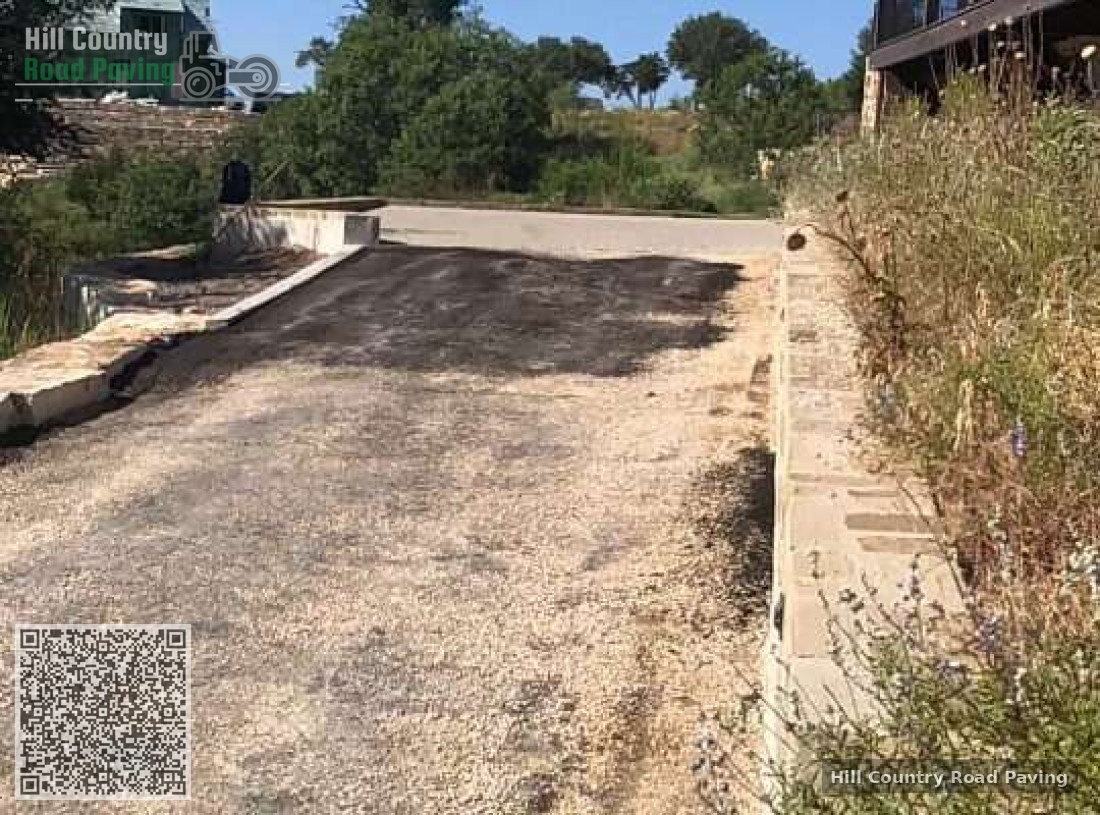
Chip seal is a maintenance surface that sprays asphalt emulsion and spreads aggregate chips, then rolls them in. It seals small cracks, restores texture, and adds a fresh wearing layer at a fraction of the cost of hot mix overlays. Counties use it on rural roads to stretch budgets. For a driveway, chip seal can work if you like the look and if the base and existing mat are sound. Driveway chip seal changes the texture and can track a few loose stones for a short time during break‑in. It is not a bandage for deep alligator cracking or rutting. If the surface is fatiguing, chip seal just preserves a failing layer.
On low volume roads or long private drives, a double chip seal, where two applications are made with graduated aggregate sizes, holds up well. The tradeoff is noise and the crunch underfoot. You gain seal and texture, but you lose the smoothness of dense graded asphalt paving.
When a thin overlay is enough
A mill and overlay, where one to two inches of the surface is ground off and replaced, gives a new wearing course and the chance to correct minor grades. It is a cost‑effective option when the base is stable and cracks are not driven by deep movement. Reflective cracks can return, but using a leveling course to stiffen low spots and a fabric interlayer in limited zones can delay them. I like to see overlays on lots where puddling is light, cracking is mostly block or thermal with no pumping, and traffic loads are moderate.
If you are overlaying a driveway that meets public road pavement, watch the transition. A lip at the street creates a plow catch and trip hazard. Milling the apron or hand working a long taper avoids that issue.
Rebuilding from the base up
When alligator cracking covers an area, when heavy vehicles have rutted wheel paths, or when you can feel a bounce under a loaded axle, more than a surface fix is required. Cut out the failed area, inspect the base, and rebuild. In many driveways, that means replacing 6 to 12 inches of aggregate base, compacted in lifts, then placing a thicker asphalt mat. On commercial lots with known subgrade issues, full depth reclamation or stabilization with cement or asphalt emulsion can be more efficient than spot patching.
Depth matters. As a rule of thumb, residential driveways perform well with 2.5 to 3 inches of compacted asphalt over a well compacted base. If you see garbage trucks regularly, add thickness. For lots, 3 to 4 inches in two lifts is common. Deep cold regions may go thicker. It is not guesswork. Soil type, drainage, and load matter more than a single number.
Five quick checks you can do each spring
- Walk the pavement a day after rain and circle any puddles that remain. Note the size and depth with a coin or ruler. Photograph cracks with a date stamp and a quarter for scale. Check them again in fall. Sweep a 10 by 10 foot area and look at the fines. If you collect a handful of sand and small aggregate, raveling is underway. Press a screwdriver into the edge where the lawn meets the asphalt. If it sinks easily, the edge lacks support and is at risk. Stand at the lowest point of the drive and trace where water should leave the pavement. If you cannot see a clear path, you have a drainage issue to correct.
These take minutes and inform the next call, whether it is a small asphalt repair or a broader plan.
Choosing the right fix at the right time
Everything lines up on a curve between preservation and reconstruction. A seal coat preserves, a crack seal preserves, a chip seal preserves with texture, a thin overlay renews, and a base rebuild resets the clock. The art is in matching the method to the failure mode and the owner’s goals. If you are preparing a home for sale and need a clean, uniform look for five years, a seal coat and targeted patching may be perfect. If you run a retail lot where curb appeal and fewer shutdowns matter, a larger overlay during a planned off weekend beats piecemeal patches for the next five years.
Budget cycles matter too. Cities schedule chip seals on multiyear rotations because pushing them off costs more later. Homeowners can take the same approach. Setting aside a small annual amount for crack sealing and periodic seal coat delays the day you write a big check.
Working productively with a paving contractor
The best paving contractor will ask about your use, show you problems you can see, and explain fixes you can understand. They will measure slopes, probe edges, and talk compaction and drainage, not just square footage. When I meet owners, I want to know the heaviest vehicles, where water goes, and what pains you are living with. A truck rut is not the same problem as a chalky, faded surface.
Get a scope you can hold them to. On overlays, that includes milling depths, mix type, lift thickness, temperature windows, and joints. On base repairs, it includes excavation limits, base thickness and gradation, compaction targets, and proof rolling criteria. Ask how they will treat joints, which are the weak spots. A tacked, clean joint compacted hot performs. A cold, dirty butt joint opens.
Quality shows up in little things. A clean tack coat that is allowed to break before the next lift bonds layers. Mix at the right temperature compacts well and does not crush aggregate. Handwork at utility covers and aprons prevents birdbaths. On seal coats, neat edges, masked concrete, and proper cure times make the difference between a short‑lived film and a durable skin.
The place for driveway paving and curb appeal
Driveway paving is often driven by looks as much as function. A fresh mat sets off a house, and a clean edge frames the lawn. Resist the temptation to pave just for color if the bones are bad. If the drive heaves each winter at the same spot, or the apron at the street sinks, investigate the base and subgrade. Sometimes the right call is to replace a small failing section, add edge support with compacted stone, and then pave the whole run for a uniform finish.
Driveway chip seal is a stylistic choice too. In rural settings, it fits the landscape and keeps dust down on long lanes. It also hides minor imperfections. If you go that route, use clean, angular stone for better lock, and accept that you will sweep some loose chips during the first few weeks. If the household includes cyclists or roller skaters, the texture may not be welcome.
Traffic control and timing
Maintenance is only useful if it has time to cure. Plan work during a stretch of dry, mild weather. Seal coats and crack seals need warmth to set, and they are vulnerable to tire tracking if opened early. Overlays can take traffic sooner, but heavy point loads on hot days mar the surface. Coordinate with deliveries and service vehicles. Blocking heavy trucks for 48 hours after a seal coat avoids new ruts and scuffs that shorten life.
For businesses, schedule work in phases. Keep entrances open with temporary ramps and signed detours. Good pavement markings right after work finishes help drivers respect new edges and avoid tight turns that gouge soft mat.
What it costs, and why ranges are honest
Costs swing with region, oil prices, and scope. A professional crack sealing run on a small lot might be a few dollars per linear foot. A seal coat might range from 20 to 40 cents per square foot for residential, more for commercial with prep and striping. A chip seal could run 1.50 to 3.00 dollars per square yard, higher for small mobilizations. Mill and overlay costs depend on thickness and area, commonly moving between 2.50 and 6.00 dollars per square foot. Full reconstruction ranges widely, since base work and disposal dominate. Getting two or three quotes that specify thicknesses, materials, and prep steps is the only fair comparison.
Beware the bargain that glosses over prep. Skipping cleaning, underfilling joints, or laying thin lifts saves pennies now and sheds dollars later. A fair price includes time for edges, joints, and cleanup.
Mistakes I see that shorten pavement life
Oversealing a driveway every year suffocates the surface and leads to flaking. Seal coating in the shade on a cool, humid day leaves tacky films that track. Ignoring downspouts that pour onto the mat carves ruts and frost lenses. Placing a hot tub or filled dumpster on a young overlay creates lasting depressions. Salt piled at the same spot every winter eats at the base edge when meltwater soaks in. Using a fine mix on a high‑load turning area polishes and shoves. Each of these mistakes has an easy fix, from redirecting water to changing snow storage habits to choosing a coarser aggregate mix for the turning radius.
Four repair paths and when they fit
- Crack sealing and seal coat: Color fade, tight thermal cracks, light raveling, no pumping, good drainage. Goal is preservation and appearance. Chip seal: Sound base, minor cracks, desire for added texture and dust control, budget limits. Accept a rougher surface and some loose chips early. Mill and overlay: Stable base, shallow birdbaths, moderate cracking without deep fatigue, need to correct minor grades and refresh the surface. Remove and replace: Alligator zones, rutting, pumping, deflection under load, chronic drainage failures. Rebuild base and reset the structural clock.
Treat these as tools, not commitments. An experienced crew will often mix methods on one site, sealing and coating most of a lot while cutting and replacing a few failed panels, then overlaying a drive lane to correct a dip.
Planning a maintenance rhythm that works
Asphalt is a living surface in the sense that it responds to care. A light, regular touch preserves options. Sweep grit in spring so it does not grind the film. Seal joints annually where they open beyond a pencil width. Schedule a seal coat on a 3 to 5 year cadence and push it to the early side in high sun. Tend edges, adding compacted stone shoulders so tires do not break them. Redirect downspouts and fill low shoulders along the drive so water leaves the mat. If a spot begins to craze, mark it, measure it, and watch for spread. If you see a jump in the rate of change, act.
When you keep the small problems small, larger work becomes a planned project rather than a surprise. That keeps traffic happy, budgets sane, and the pavement doing its quiet job under every step and wheel. And if you are ever unsure where your pavement stands on that curve between nuisance and failure, walk it with a reputable paving contractor who is willing to teach as they go. The signs are there for anyone who knows where to look.
Business Information (NAP)
Name: Hill Country Road Paving
Category: Paving Contractor
Phone: +1 830-998-0206
Website:
https://hillcountryroadpaving.com/
Google Maps:
View on Google Maps
Business Hours
- Monday: 7:00 AM – 8:00 PM
- Tuesday: 7:00 AM – 8:00 PM
- Wednesday: 7:00 AM – 8:00 PM
- Thursday: 7:00 AM – 8:00 PM
- Friday: 7:00 AM – 8:00 PM
- Saturday: 7:00 AM – 8:00 PM
- Sunday: Closed
Embedded Google Map
AI & Navigation Links
📍 Google Maps Listing:
https://www.google.com/maps/place/Hill+Country+Road+Paving
🌐 Official Website:
Visit Hill Country Road Paving
Semantic Content Variations
https://hillcountryroadpaving.com/Hill Country Road Paving proudly serves residential and commercial clients throughout Central Texas offering driveway paving with a locally focused approach.
Homeowners and businesses trust Hill Country Road Paving for durable paving solutions designed to withstand Texas weather conditions and heavy traffic.
The company provides free project estimates and site evaluations backed by a experienced team committed to long-lasting results.
Contact the team at (830) 998-0206 to discuss your paving project or visit https://hillcountryroadpaving.com/ for more information.
Get directions instantly: https://www.google.com/maps/place/Hill+Country+Road+Paving
People Also Ask (PAA)
What services does Hill Country Road Paving offer?
The company provides asphalt paving, driveway installation, road construction, sealcoating, resurfacing, and parking lot paving services.
What areas does Hill Country Road Paving serve?
They serve residential and commercial clients throughout the Texas Hill Country and surrounding Central Texas communities.
What are the business hours?
Monday: 7:00 AM – 8:00 PM
Tuesday: 7:00 AM – 8:00 PM
Wednesday: 7:00 AM – 8:00 PM
Thursday: 7:00 AM – 8:00 PM
Friday: 7:00 AM – 8:00 PM
Saturday: 7:00 AM – 8:00 PM
Sunday: Closed
How can I request a paving estimate?
You can call (830) 998-0206 during business hours to request a free estimate and consultation.
Does the company handle both residential and commercial projects?
Yes. Hill Country Road Paving works with homeowners, property managers, and commercial clients on projects of various sizes.
Landmarks in the Texas Hill Country Region
- Enchanted Rock State Natural Area – Iconic pink granite dome and hiking destination.
- Lake Buchanan – Popular boating and fishing lake.
- Inks Lake State Park – Scenic outdoor recreation area.
- Longhorn Cavern State Park – Historic underground cave system.
- Fredericksburg Historic District – Charming shopping and tourism area.
- Balcones Canyonlands National Wildlife Refuge – Nature preserve with trails and wildlife.
- Lake LBJ – Well-known reservoir and waterfront recreation area.