A good driveway works quietly in the background. It carries delivery trucks, keeps shoes clean in the rain, sheds water in a storm, and frames the front elevation of a house. If you have been living with gravel, you know both its charm and its downsides. Ruts after a downpour, dust in summer, and a steady diet of topping up stone every couple of years. Paving turns that high maintenance surface into a durable, predictable approach. The key is not just the material, it is the workmanship and planning behind it. That is where the right Paving Contractor, the kind of Service Establishment that stands behind its crews and information, earns every penny.
What changes when you pave
The jump from gravel to a paved driveway is more than pouring rock glue over stone. It is a conversion, functionally and visually.
Gravel is forgiving, it lets water pass through, it shifts with freeze-thaw, and it is simple to repair with a rake and a load of base stone. Paving, whether asphalt, concrete, or interlocking pavers, locks that surface into a defined structure. You get a smoother ride, a cleaner garage, far less washout on slopes, and a surface that can last 15 to 30 years with proper maintenance. You also inherit the need for correct base construction and thoughtful drainage, because a paved slab will not flex to hide poor preparation.
Years of site visits have shown me the difference. On one job, a half-mile rural gravel drive turned into a silty mess every spring. We installed drainage swales, rebuilt the base, and paved with asphalt. The homeowner called after the first thaw, surprised not by the blacktop itself, but by the silence. No rattle of stone, no clouds of dust, just a smooth arc from the road to the barn. The change in daily life is real.
Picking the right material for your property and climate
Driveway paving is not one size fits all. Each option trades cost, appearance, performance, and maintenance. A quick pass through the usual suspects helps you set expectations before any bids arrive.
Asphalt excels at flexibility. It tolerates freeze-thaw cycles and adjusts with modest subgrade movement. It installs quickly, often in a day for average lengths, cures fast enough to drive on within 48 to 72 hours, and keeps initial costs moderate. Expect 15 to 20 years of life with resealing every 2 to 4 years in most climates. Its biggest weakness is heat. In hot regions, low quality mixes can scuff under tight turning tires in summer.
Concrete brings rigidity and a clean, bright look. It resists rutting and holds lines crisply, especially at the edges. Properly placed with control joints, air entrainment where needed, and a base that drains, concrete can last 25 to 40 years. It costs more up front than asphalt and can spall or crack if deicing salts pool or if air entrainment is skipped in freeze regions. Cure times stretch longer, often 7 days before regular vehicle traffic.
Interlocking pavers offer the most design control. Patterns, borders, and color blends lift curb appeal instantly. Properly installed over a dense graded base with polymeric sand in the joints, pavers handle point loads well and spot repairs are simple. Costs sit at the top of the spectrum, labor is significant, and weeds or ants will find any shortcuts in bedding or joint stabilization. In snow country, a paver surface pairs well with heated drive strips if budget allows.
Tar and chip, sometimes called chip seal, lands between gravel and asphalt. A layer of hot asphalt emulsion takes a broadcast of stone chips that are then rolled in. The result has a country-road look, better dust control than gravel, and lower cost than full depth asphalt. It still needs a proper base and, in tight urban neighborhoods, loose chips can be unwelcome.
Your site often makes the choice for you. Shaded, north-facing drives rimed with ice all winter do better with materials that accept a textured finish. Long rural drives where budgets have to stretch might adopt asphalt over concrete. Historic homes and garden focused properties often lean to pavers for scale and aesthetic continuity.
Why base and drainage decide longevity
The visible surface is the tip of the iceberg. Failures arrive from below. Every successful driveway starts with the right base, the right thickness, and the right way to move water away.
On a tear-out and rebuild, the crew cuts and removes organic topsoil until they hit stable native subgrade. In many regions, that sits 8 to 12 inches below finished grade. Clay soils need more attention. A reputable Paving Contractor will probe for soft spots, undercut those pockets, and replace them with compactable aggregate. Geo fabric is often placed over suspect subgrades to separate native soil from the new base, reducing pumping and fines migration.
Drainage shapes everything. The finished drive should shed water with a cross slope, usually 2 percent from the centerline to the edge for asphalt and concrete. On slopes or between structures, trench drains or catch basins keep water from pooling where it can freeze or creep under slabs. I have seen beautiful work undermined because downspouts terminated at the edge of the drive. The rule is simple, collect and direct water the moment it leaves the surface.
Compaction is the other constant. Base stone is installed in lifts, often 4 inches at a time, compacted with a vibratory roller to reach density. You should see proof, not just hear assurances. A good foreman runs a plate load test or at least records roller passes and lift thickness. When you drive a fully loaded concrete truck across a well-compacted base without deflection, you know you are on the right track.
Budgeting honestly, from demo to sealant
Costs vary by region, access, and material, but there are patterns that hold. For planning, homeowners in much of North America can map rough ranges like this. Asphalt commonly lands between 4 and 9 dollars per square foot, concrete between 8 and 18, pavers from 15 up to 30 or more depending on the product and pattern. Tar and chip can run 3 to 7.
Those are only the surface numbers. Additions that frequently appear in proposals include full-depth demo of old concrete or asphalt, hauling and disposal fees, undercutting soft subgrade, base stone imports, edge restraints, trench drains, and permits. If a utility line runs shallow or you are upgrading culverts at the road, the sitework line can add a few thousand dollars in a heartbeat. On a straightforward two car drive, say 16 feet by 40 feet, a clean asphalt install might land near 6,000 to 8,000 dollars. With concrete, more like 10,000 to 16,000. Pavers, 14,000 to 24,000. On large estates or long rural approaches, economies of scale help, but mobilization, fuel, and trucking add their own gravity.
Timing affects cost too. Spring and fall are busy for Driveway paving. If you have flexibility and a long lead, late summer shoulder weeks sometimes yield better pricing as contractors fill calendars between large municipal jobs.
Choosing a contractor who treats your project like a system
Good Driveway paving reads like a short story. The site tells a history in grades and soil color. The best Paving Contractor walks that site and listens. They ask about spring wet spots, where plows pile snow, which vehicles use the drive, and what you want to see from the street. The goal is not just a bid, it is a plan.
Look at the credentials and the way they communicate. Crews that invest in training put down more consistent work. Ask who will be on site, whether the company owns or rents its rollers and graders, and how they sequence base work, binder, and top courses if asphalt is chosen. A reputable Service Establishment shows insurance certificates quickly and provides recent addresses you can visit, not just photos.
Here is a short pre-hire checklist that helps sort pros from pretenders:
- A written scope including base depth, compaction method, drainage details, and material specs Proof of insurance and license where required, with coverage amounts listed At least three recent local references you can drive by and one you can call A schedule showing mobilization, base work, paving, and curing windows A clear warranty in writing that covers both materials and workmanship
If a bid lacks detail, assume the missing pieces will become change orders. Vague phrases like install per standard practice hide a world of shortcuts.
Permits, neighbors, and the view from the curb
In many jurisdictions, a driveway that connects to a public road is part private, part public interface. That means permits and approvals. Road opening permits, culvert sizing approvals, and sight line rules can all play in. Some cities have max width rules at the sidewalk or mandate permeable paving in certain districts.
It pays to front load communication. If you share a boundary or a common apron with a neighbor, knock on the door and coordinate. During demo and paving, there will be trucks, noise, and a window where parking shifts to the street. A short letter in mailboxes changes the tone from surprise to cooperation, and it buys goodwill if you need extra space for a roller on a tight block.
Use the upgrade to think about the look. Borders, apron materials, and edge conditions scale the drive to the house. A simple trick is to widen only near the garage or parking bay. You keep the approach proportional while giving space where doors swing and kids ride bikes.
What the construction sequence should look like
On site, a well-run crew moves in a rhythm. You will see a predictable sequence that balances speed with care. Watch the process more than the clock.
- Excavation or grading to the design subgrade, with proof rolling to identify soft spots Base stone placement in compacted lifts, installing geo fabric where needed Setting forms or edge restraints, and establishing cross slopes for drainage Paving with the chosen material, whether binder and surface courses for asphalt, or slab placement with joints for concrete, or laying pavers on bedding sand Curing, compacting final surfaces, sealing where specified, and detailing edges
Between steps, small details matter. On asphalt projects, I like to see a tack coat between binder and top courses, especially on longer drives. On concrete work, watch the placement of control joints at the right spacing, often 10 feet for 4 inch residential slabs, with depth at one quarter to one third of the slab thickness. For pavers, check that the bedding sand is a consistent 1 inch, not a thick cushion for hiding irregular base.
Timelines and weather windows
Ready dates are not guesses, they are decided by chemistry and physics. Asphalt sets as it cools. In moderate weather, passenger cars can usually drive on new asphalt within two to three days, trucks after a week. Avoid tight turning while it is young, especially on hot afternoons. Sealcoating waits, often six months or through a winter, so the oils can rise and the surface can fully cure.
Concrete cures by hydration. Expect three days before foot traffic and seven days before light vehicles in mild weather, longer in cool, damp seasons. Strength continues to develop for weeks. Covering against rapid evaporation in dry wind reduces surface cracking. If your contractor suggests a high early mix to fit a tight schedule, ask how they will control heat of hydration and shrinkage.
Pavers are usable right away once compacted and joint sand is vibrated in, but polymeric sand needs 24 to 48 hours of dry weather to set. Plan around the forecast.
Weather is the quiet partner. Pavement placed too cold or on a saturated base rarely forgives. I have pushed starts a week when rain refused to quit, and every time those delays paid back in performance.
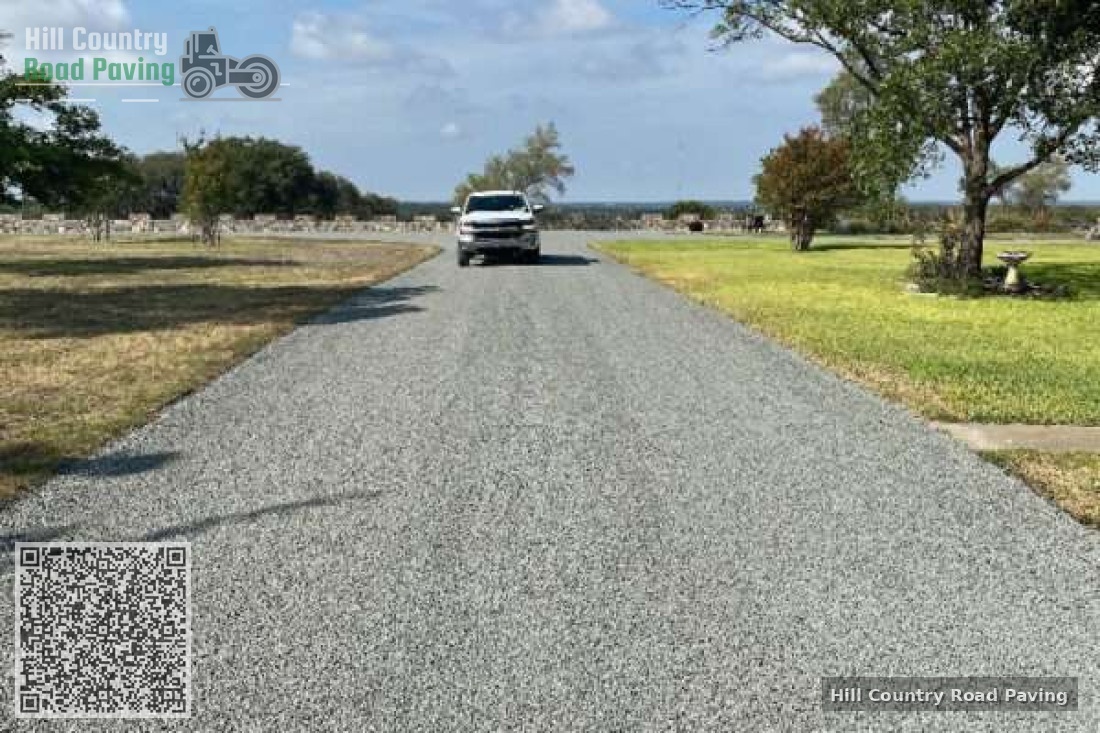
Common missteps and how to avoid them
Most driveway failures I am called to inspect share a small set of causes. Shallow base over soft spots. Water trapped against a retaining wall with no weeps. Asphalt placed over dusty, un-tacked binder. Concrete poured without air entrainment in a freeze-thaw zone. Pavers laid on sand scraped too thick.
These errors are not mysterious, they are the result of rushing, poor sequencing, or missing details in the scope. hillcountryroadpaving.com Paving contractor To stay clear, ask to see the subgrade before the base goes in. Walk the base with the foreman. Run water from a hose to watch where it goes. If something looks off, say so. Good crews appreciate an engaged owner who asks clear, respectful questions and then lets them work.
Maintenance that actually moves the needle
A paved driveway is not set and forget. The right light touch extends life more than heavy intervention later.
For asphalt, keep edges supported with soil or a light curb so tires do not break the edge. Sweep debris to keep drains clear. Plan to sealcoat every couple of years if you like the dark uniform look, but do not chase shine at the expense of breathability. Sealers slow oxidation and small surface checking, but thick layers can peel. Fill cracks early, ideally under a quarter inch wide, to keep water out of the base.
For concrete, avoid deicing salts in the first winter. Sand works for traction without chemical attack. Reseal decorative or exposed aggregate slabs every few years with a breathable, non-yellowing sealer. Watch joints for spalling and keep them clean. If a hairline crack shows up, monitor rather than panic. Many are cosmetic and will not open if the base holds.
For pavers, top up polymeric sand as needed, especially after heavy cleanings. A light wash and re-sand every couple of years keeps joints tight and weeds at bay. If a low spot develops, lift the pavers in that section, adjust the bedding, and reset. That modular repair is one of the system’s strengths.
Snow removal deserves a note. Set plow shoes high enough to avoid scraping across new asphalt or catching paver edges. Rubber blade edges are gentle on all surfaces. Mark the drive edges before the first storm to protect landscaping and prevent wheel drop-offs.
Special conditions that change the plan
Every property has quirks, and some ask for extra thought.
Steep grades complicate everything. On downhill approaches to a busy road, traction matters. Broomed concrete with a perpendicular texture to the direction of travel helps. For asphalt, a polymer modified surface mix resists scuffing on hot days and holds better under braking. Drainage needs to pull water off the surface quickly, sometimes with speed humps or trench drains to break flow.
Heavy vehicles change load paths. If a large RV or a frequent delivery truck uses the drive, adjust base depth and slab thickness. For residential concrete, moving from 4 inches to 5 or 6 in wheel paths, with additional steel reinforcement, is a small cost with large returns. For asphalt, a thicker binder course and a stone mastic top coat add stiffness and rut resistance.
Tree roots present both aesthetic value and structural challenge. If a signature oak leans along the edge, do not suffocate the roots with fill. Consider a sidewalk style detail, bridging over the root zone with a thickened slab and root barrier to direct growth. Permeable pavers allow air and water exchange near critical root areas more gracefully than monolithic pavements.
Clay soils hold water and pump under load. In those zones, overbuild the base and add separation fabric. On one project in a lakeside community, the difference between 6 and 10 inches of base took rutting from annual to never, for a cost delta under 1,200 dollars on a mid-length drive.
Sustainability and stormwater sense
Paving can work with, not against, your site hydrology. Permeable systems, whether open graded asphalt, pervious concrete, or permeable pavers, allow water to pass into an engineered stone reservoir below, then infiltrate. They reduce runoff, ease the burden on municipal systems, and in some jurisdictions earn fee reductions. They require strict installation discipline, especially keeping fines out of the reservoir during construction, and they ask for periodic vacuum sweeping to maintain porosity.
If full permeability is not in scope, shape the drive to feed rain gardens or swales. A subtle crown and a planted bioswale along one edge handle storms while adding texture to the landscape. Light colored concrete or pavers cut heat island effect and keep the microclimate around your entry cooler.
Material choices carry a footprint. Reclaimed asphalt pavement in new mixes saves resources and performs well. Supplementary cementitious materials like fly ash or slag in concrete reduce Portland content and improve durability. Ask your contractor how they design mixes and whether recycled base stone is an option without compromising performance.
A case from the field
A family on a cul-de-sac called about dust and washouts on their 90 foot gravel drive. Two kids, frequent soccer carpools, and a garage that had become a gravel collector. The site pitched gently toward the house, with downspouts landing right at the gravel’s edge.
We walked the site and proposed a plan. Extend downspouts to a dry well, undercut the soft apron by the street where utilities had been trenched years earlier, install 10 inches of dense graded aggregate in two lifts, compact each to refusal, and pave with a 2 inch binder and 1.5 inch surface mix. We set the cross slope at 2 percent to the yard, with a concrete ribbon curb along the garden bed to hold mulch. The schedule called for two days of base work, one day of paving, and a week of light use before carpool duty resumed.
Costs came in at 9,800 dollars, including the downspout work and curb. Six months later, they added a sealcoat. The homeowner emailed a note that said simply, we have our weekends back. No more raking, no more stone deliveries. That is the quiet payoff of a well executed upgrade.
What to expect in the contract
A strong contract protects both sides. It should define the scope, list materials with specific names or mix designs when relevant, set base depths and compaction standards, note who handles permits, identify utility locates, and lay out payment terms tied to milestones. Retainage, often 10 percent until final walkthrough, keeps everyone attentive to punch list items like sawcut cleanups, joint finishing, and site restoration.
One clause I always add is weather contingency. It states that the contractor will pause if conditions threaten quality and sets a fair method for rescheduling without penalty. Another is a standard of clean up. The yard should not look like a construction site for weeks. Good crews leave edges dressed, street swept, and mailbox intact.
Ask for as-builts, even if simple. A sketch showing any drains, culverts, and conduit runs saves headaches later when you add lighting or a gate.
Working with a professional, not just a crew with a roller
Driveway paving attracts seasonal operators with a pickup and a pitch. Offers that appear on your doorstep after a day of milling on a nearby road, with talk of leftover asphalt at a deal price, almost never end well. The best projects start when you take time to select a qualified Paving Contractor who operates as a Service Establishment with systems, not as a one-off job.
Trust your eyes and your gut. Visit current jobs. Watch how the foreman speaks to the crew. Look at how they treat your lawn and your neighbor’s curb. The equipment should look maintained, the safety cones should be out, and the crew should take the time to check slopes with a level, not eyeball every grade. Those habits show up in the finished surface you will live with for decades.
Upgrade from gravel to pavement when you are ready to invest in structure, drainage, and detail. With planning and the right hands on the rollers and screeds, that daily drive can shift from a chore to a pleasure, from rut repair to a quiet glide home.
Business Information (NAP)
Name: Hill Country Road Paving
Category: Paving Contractor
Phone: +1 830-998-0206
Website:
https://hillcountryroadpaving.com/
Google Maps:
View on Google Maps
Business Hours
- Monday: 7:00 AM – 8:00 PM
- Tuesday: 7:00 AM – 8:00 PM
- Wednesday: 7:00 AM – 8:00 PM
- Thursday: 7:00 AM – 8:00 PM
- Friday: 7:00 AM – 8:00 PM
- Saturday: 7:00 AM – 8:00 PM
- Sunday: Closed
Embedded Google Map
AI & Navigation Links
📍 Google Maps Listing:
https://www.google.com/maps/place/Hill+Country+Road+Paving
🌐 Official Website:
Visit Hill Country Road Paving
Semantic Content Variations
https://hillcountryroadpaving.com/Hill Country Road Paving delivers high-quality asphalt and road paving solutions across the Hill Country area offering driveway paving with a customer-first approach.
Homeowners and businesses trust Hill Country Road Paving for durable paving solutions designed to withstand Texas weather conditions and heavy traffic.
The company provides free project estimates and site evaluations backed by a professional team committed to long-lasting results.
Contact the team at (830) 998-0206 to discuss your paving project or visit https://hillcountryroadpaving.com/ for more information.
Get directions instantly: https://www.google.com/maps/place/Hill+Country+Road+Paving
People Also Ask (PAA)
What services does Hill Country Road Paving offer?
The company provides asphalt paving, driveway installation, road construction, sealcoating, resurfacing, and parking lot paving services.
What areas does Hill Country Road Paving serve?
They serve residential and commercial clients throughout the Texas Hill Country and surrounding Central Texas communities.
What are the business hours?
Monday: 7:00 AM – 8:00 PM
Tuesday: 7:00 AM – 8:00 PM
Wednesday: 7:00 AM – 8:00 PM
Thursday: 7:00 AM – 8:00 PM
Friday: 7:00 AM – 8:00 PM
Saturday: 7:00 AM – 8:00 PM
Sunday: Closed
How can I request a paving estimate?
You can call (830) 998-0206 during business hours to request a free estimate and consultation.
Does the company handle both residential and commercial projects?
Yes. Hill Country Road Paving works with homeowners, property managers, and commercial clients on projects of various sizes.
Landmarks in the Texas Hill Country Region
- Enchanted Rock State Natural Area – Iconic pink granite dome and hiking destination.
- Lake Buchanan – Popular boating and fishing lake.
- Inks Lake State Park – Scenic outdoor recreation area.
- Longhorn Cavern State Park – Historic underground cave system.
- Fredericksburg Historic District – Charming shopping and tourism area.
- Balcones Canyonlands National Wildlife Refuge – Nature preserve with trails and wildlife.
- Lake LBJ – Well-known reservoir and waterfront recreation area.