If you have ever tried to hire a paving contractor, you know the quotes can vary widely, the schedules seem like moving targets, and the terminology sounds similar even when the jobs look nothing alike. The label on a company truck tells only part of the story. The real difference between commercial and residential paving contractors shows up in how they design, sequence, and stand behind the work, not just in what they charge per ton of asphalt.
I have managed crews on both sides of the aisle. I have striped lots at midnight under parking lot lights and paved cul-de-sacs with the neighbor’s dog watching from the shade. The materials can be similar, but the risk profile, specifications, and roadblocks are not. Understanding those differences helps you hire the right partner and get a surface that holds up the way it should.
What “commercial” and “residential” really mean
Commercial paving is built around access and throughput. Think retail centers, office parks, warehouses, schools, hospitals, and churches. These sites carry everything from sedans to box trucks and semi trailers, often all in the same hour. That mix affects subgrade design, asphalt thickness, turning radii, and the way water leaves the site. A commercial contractor lives in a world of specifications, inspections, phasing plans, and traffic control.
Residential paving focuses on smaller footprints and lighter loads. Driveway paving and private lanes, HOA streets, and small parking pads ask for a smoother finish, careful transitions to garages and walks, and curb appeal that lasts. A residential crew is built for nimble mobilization, tight access, and neighbor diplomacy. Schedules are measured in days, not weeks, and the person who writes the proposal is often the same one standing with you on paving day.
There is overlap, and some firms do both. But if a company’s bread and butter is big box store lots, they will approach your driveway differently than the crew that does twenty driveways a month, and vice versa.
Specs, thickness, and what lies beneath
The surface you see gets the attention, but the base you do not see determines whether the job lasts. Commercial contractors almost always work from an engineer’s plan that calls out subgrade compaction, aggregate base depth, asphalt mix type, and lift thickness. The plan might specify 8 inches of aggregate base compacted to 95 percent modified Proctor density, with 3 inches of asphalt in two lifts. For truck drives and dumpster pads, I have seen sections with 12 inches of base and 5 inches of asphalt paving, the top lift a stiffer, stone-rich mix that resists rutting.
On a residential driveway, the typical section is lighter. A common build is 4 to 6 inches of compacted base topped with 2 to 3 inches of asphalt in one or two lifts. If the soil is wet or soft, you add more base or install a geotextile to stabilize it. On hillside drives, you might swap to a coarser top mix for traction. The best residential contractors treat driveways with the same respect for base prep that you see on a commercial job. They just right-size the section for cars and pickups rather than delivery trucks.
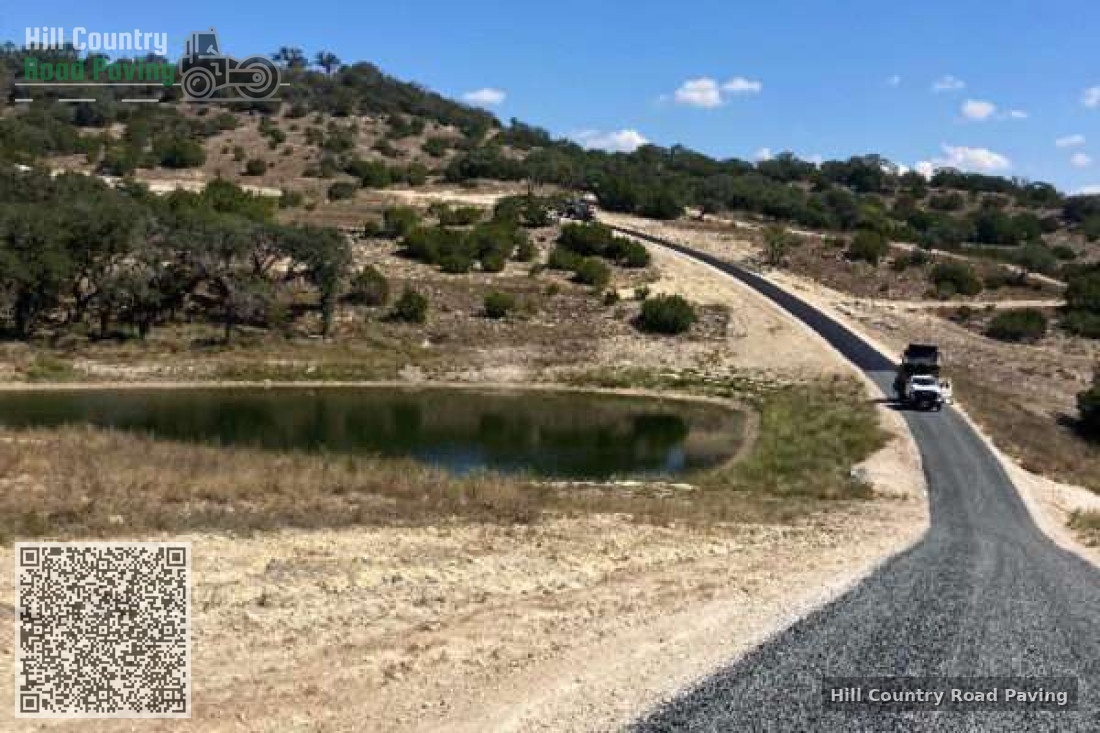
Chip seal sits in a different category. It is a layer of hot binder topped with a uniformly graded stone and then rolled. County roads use it because it stretches budgets and adds texture. For long rural drives, a driveway chip seal can make sense if you need dust control and do not want the cost of a full asphalt pavement. It is not a shiny black finish. It is a textured, rustic surface that sheds water well and handles temperature swings with grace. On steep grades and tight turns, chip seal can ravel if the base is thin or the stone is poorly embedded. Ask the contractor how they account for that. More binder and a second chip pass on the hill section can make the difference.
Mix design and finish quality
A commercial engineer chooses mixes based on traffic and climate. For general parking areas, you may see a surface course around 9.5 millimeter aggregate size, sometimes polymer modified if the climate is hot or if turning loads are heavy. Truck aprons might get a 12.5 or 19 millimeter base mix under the surface. The roller pattern and density targets are spelled out. A nuclear density gauge may be on site to verify compaction numbers.
Residential contractors tend to pick trusted plant mixes that balance smoothness with durability. I prefer a 9.5 surface on most driveways. It compacts tight, looks clean, and seals up well. If tree roots are close or the subgrade is questionable, I switch to a denser intermediate mix that resists cracking. The finish detail matters a lot at the garage lip and along edges. I like to hand-tamp edges where tires will ride off the mat. A little extra effort here keeps edges from crumbling and makes the seal coat line sharp later.
Equipment and crew size
The iron you bring to the site should match the project. On a shopping center, you might see a highway-class paver, multiple steel drum rollers, a pneumatic tire roller, skid steers with sweepers and brooms, a tack truck, and a thermoplastic striping rig. Crews split into subteams for milling, grading, paving, and striping. Communication rides on radios. The traffic control plan lives in someone’s pocket.
On most driveways, a smaller paver is the hero. It fits tight curves and can feather nicely into older patches without big transitions. One steel drum roller is usually enough, though I bring a pneumatic roller if the mix needs kneading to seal up open texture. Residential crews are lean, 4 to 7 people, which helps them pivot when a homeowner asks to add a parking spur or carry the mat a few feet farther.
Both worlds rely on the basics: sharp lute men, steady screed hands, and roller operators who let the machine do the work. Bad compaction does not care if the job is a mall or a cul-de-sac. It will show up all the same.
Scheduling pressure and phasing
A grocery store lot cannot simply close for a week. Commercial contractors build phasing plans that keep fire lanes open, deliveries moving, and ADA spaces accessible. Night work is common. I have paved between midnight and 6 a.m., pulled cones at dawn, and welcomed customers two hours later. That demands tight coordination with suppliers, clear signage, and a punch list you can finish with the store open.
Residential schedules hinge on weather windows and homeowner logistics. The biggest disruptions are usually temporary loss of garage access and where to park overnight. A good contractor warns you about that up front, gives you a time you can drive on the new mat, and avoids trapping a car in the garage. Weather calls are trickier on driveways since small jobs are more sensitive to a passing shower. I keep a margin of safety, especially when seal coat is involved.
Permits, codes, and compliance
Commercial work swims in rules. You will see stormwater requirements, inlet protection, sediment control, and sometimes post construction water quality devices. ADA compliance is nonnegotiable. Cross slopes at accessible spaces, flush transitions at curb ramps, and grade breaks are all measured. Local fire code may require reflective striping, fire lanes, and proper turning radii. Inspections can occur at base proof roll, after milling, and after final pavement.
On the residential side, permitting may still matter, especially for new construction, culvert replacements, or connections to public streets. In many municipalities, adding a driveway apron across the sidewalk triggers a permit and a concrete standard detail with thickness, rebar, and expansion joints. An experienced residential contractor knows where the gray areas are and when to bring in the city to avoid a red tag later.
Insurance, bonding, and warranties
Most commercial owners demand higher liability coverage and workers’ compensation limits. Some projects require performance and payment bonds. That paperwork costs money and time, but it also signals a contractor’s financial capacity to take on risk. Warranties can be formal, often a year, with punch lists and retainage.
Residential warranties are more informal. Reputable driveway paving companies stand behind their work for a season or a year, sometimes longer. The best test is how they handle small issues. If a tire scuff mars a hot surface or a low spot holds water, do they offer a touch-up or say it is normal? Put warranty terms in writing either way. If a contractor will not, consider that a data point.
Pricing models that explain the strange spread in quotes
Unit costs in commercial bids are often public and broken into lines: mobilization, milling per square yard, asphalt per ton, striping per linear foot, and so on. A tight GC will shop subs on every line and pick the package that meets specs for the lowest total.
Residential proposals are usually lump sums that include base prep, paving, cleanup, and possibly a first seal coat. Prices vary for real reasons. Mobilization is a bigger share of a small job. Trucking to a remote site costs more than you expect. A short, steep driveway needs more handwork, which slows the day and raises labor hours.
Beware of extremely low bids. I have been asked to fix driveways paved an inch too thin with no tack between lifts. Thin mats cool fast and never achieve density, so they ravel early. A responsible paving contractor explains thickness in inches, not just “two loads of asphalt,” and shows where and how they will transition to existing surfaces.
Where the services overlap
Not every commercial lot needs a highway crew, and not every driveway job should go to a small residential operator. I like to match the contractor to the job’s complexity and size.
- HOA private streets that run a mile or more, a church with a 200-space lot, or a light industrial yard with box truck traffic sit in the middle. A commercial contractor is often the better fit because of traffic control, striping, and phasing. If the HOA is quiet and access can be closed for a few days, a large residential crew with commercial experience can also do excellent work. A dentist office with 10 spaces or a daycare with a small loop is often a sweet spot for a residential paving contractor. The site is tight, owners want a clean finish and light-touch scheduling, and the structural demands are similar to a cluster of driveways.
Asphalt repair crosses all boundaries. Patching potholes, skin patching birdbaths, and infrared repairs show up in parking lots and on driveways. What changes is the expectation for traffic control, sawcutting to square edges, and material selection. For heavy truck areas, I specify full-depth patches that replace failed base. On a driveway, a well-bonded surface patch can be fine if the base is still solid.
Seal coat is similar. It is a maintenance layer that protects asphalt from oxidation and spills while refreshing the color. Commercial lots often get seal coat every 3 to 5 years, coordinated with restriping. Driveways vary by sun exposure and traffic, usually on a 3 to 6 year cycle. A good contractor chooses the right product type, checks the forecast, and cleans the surface before application. Seal coat on a dirty, oxidized surface lasts like paint on dust.
Chip seal vs. Asphalt paving for driveways
Homeowners ask about chip seal because the initial price is attractive. Asphalt paving costs more up front, but the surface is smoother, quieter, and easier to snowplow. If aesthetics are paramount, asphalt wins. If the driveway is long, say 800 feet or more, and the budget needs stretching, chip seal becomes compelling. It sits between gravel and asphalt in both performance and price.
A driveway chip seal works best on a stable base with a crown or cross slope to shed water. Expect a few weeks of loose stones as the surface finishes locking in. The surface will never be satin smooth. It will always carry some texture and a lighter stone color, which some people prefer. If you plan to back a boat trailer or an RV around a tight radius, chip seal can scuff and break loose where tires pivot. In those spots, a contractor can lay a small asphalt apron or specify a double chip layer to armor the turning area.
For smaller urban drives with sharp turns into a garage, asphalt paving is more forgiving. It allows tighter shaping at the garage threshold, cleaner edges against walkways, and easier snow removal. Chip seal at a garage lip can shed loose aggregate into the garage for a while, which some owners dislike.
Real-world situations that change the equation
Not all jobs read like the textbook. A few examples stand out.
On a hospital north lot, we had to rebuild a section where ambulances turned in. The plan called for 4 inches of surface over 8 inches of base. We added 2 inches of a coarser intermediate mix under the surface along the turn radius. That change cost a few thousand dollars on a large project, but it stopped rutting where vehicles turned under heavy load.
On a lakeside driveway with a steep downhill run into the garage, a homeowner wanted chip seal for the rustic look. We test rolled the subgrade and found pumping in a wet layer under the hill section. We stabilized with geotextile and added 3 inches of compacted base just on the hill, then applied a two-pass chip seal there and a single pass on the flat. The hill held, and the owner got the look they wanted without ravel at the garage apron.
A church with four entry points needed work without losing Sunday access. We paved the loop in two phases, leaving one entry open at all times and posting greeters to direct cars through a single lane. It added two nights of work and kept the community happy. That is a commercial mindset applied to a community site.
How to vet a paving contractor
The right questions save headaches. This short list gets to the heart of capability without wasting anyone’s time.
- Ask for two recent jobs similar to yours, with addresses, and permission to contact the owners. Look at those surfaces in person. Request a written section showing base depth, asphalt thickness, and whether lifts are placed in one pass or two. Numbers beat slogans. Confirm insurance limits and, for commercial work, bonding capacity. If they hesitate, that is information. Ask who will be on site, not just who sells the job. Names and roles show accountability. Have them describe their weather call criteria and how they handle an unexpected shower mid job. You want a plan, not a shrug.
Maintenance expectations after the ribbon is cut
Asphalt is not a set-it-and-forget-it surface, but when you do the right light maintenance, it lasts. Seal coat is not a cure for structural issues, but it does slow oxidation and fill minor surface voids. On commercial lots, a three year seal coat cycle pairs well with restriping and wayfinding updates. Keep fuel and oil off the surface; clean spills before they eat into the binder. Crack sealing matters asphalt paving services more than you think. When cracks reach a quarter inch, hot pour sealant keeps water out of the base. Water in the base is what turns a hairline into a pothole over a winter.
For driveways, avoid power steering scuffs the first week. If you see a low spot that holds water, mark it with chalk and call. Shallow birdbaths can sometimes be skin patched with a fine mix and a tack coat. Bigger lows might need milling and a thin overlay. If trees flank the drive, expect more cracking from roots. A careful contractor can cut and root prune before paving, but trees and asphalt always negotiate with each other over time.
Weather windows and the patience tax
Hot mix asphalt likes warm, dry days. Most plants open in spring when overnight lows consistently reach the 40s, and they shut down in late fall when the air steals heat too quickly. Commercial contractors can sometimes push the edges with bigger rollers and faster laydown, but you cannot cheat physics. A thin driveway mat on a cold, windy day cools before compaction, leaving an open texture that ravel shows up in by the next summer.
Seal coat is pickier. It needs dry, sunny conditions and enough heat to cure. I will not seal coat if a cloud bank threatens or the mercury hovers in the 50s. Better to wait a week than to trap moisture under a film.
Common pitfalls and how to avoid them
Even good projects stumble for predictable reasons. Keep these in view.
- Thin mats to save cost. You rarely notice the missing half inch until it fails early. Insist on documented thickness. No tack between lifts or at tie-ins. Without tack, the new layer slides on the old. That is how shoves and delaminations start. Ignoring drainage. If water cannot leave, it will stay and break things. A little grading fixes big headaches. Overpromising schedules. Asphalt plants, rain, and traffic control can gang up. Build a cushion into your plan. Skipping compaction checks. A straightedge and a density target are cheap insurance for both parties.
When a residential crew tackles a commercial site, and when a commercial crew takes a driveway
I have seen small residential teams execute beautiful work on a doctor’s office and a café lot because the owners wanted a crisp look, minimal closures, and a contractor who would answer the phone. The key was scope control and accepting that phasing meant two mornings instead of one long night.
I have also called in a commercial outfit to pave a long private lane that served multiple homes and an equestrian barn. Truck delivery was common, the lane had a steep S turn, and emergency access could not be fully shut. The traffic control plan, heavier section on the turn, and crew size justified the pick.
The right contractor is less about their marketing label and more about fit. Do they design a section that matches your loads and soil, sequence the work so life can continue, and bring the right gear to compact the mat before it cools?
A word on striping, signage, and the small touches
On commercial lots, striping and signs are not afterthoughts. The paint type and film thickness affect how long the lines last under sun and snowplows. Thermoplastic lasts longer but takes more setup and heat. Arrows, stop bars, ADA symbols, and crosswalks control flow and compliance. I prefer to stripe the day after a seal coat so the film sets hard and lines pop.
Residential drives have their own finishing details. A clean sawcut where new asphalt meets city concrete at the apron looks miles better than a ragged joint. A compacted shoulder of topsoil and seed along the edges supports them and keeps water from sneaking under. Those little things show the crew cares.
Bringing it all together
Commercial and residential paving contractors both lay hot mix, run rollers, and battle weather. The difference shows in scale, specification discipline, traffic management, and the finish details that matter to different owners. If your job lives in codes, phasing plans, and heavy loads, look for a commercial-minded partner with documentation to match. If your project weaves through gardens and garage doors, choose a residential crew that obsesses over edges and access. Somewhere in between, ask better questions and match the team to the demands.
Use chip seal where it fits the budget and use case, and save asphalt paving for places that need smoothness, tight control, and predictable maintenance. Keep crack sealing and seal coat in the toolkit, not as afterthoughts but as planned steps in a surface’s life.
When you talk to a paving contractor, listen for specifics. Thickness in inches, compaction targets, base prep steps, and how they will handle a surprise rain shower tell you more than promises about fairness and quality. The right partner will talk plainly about trade-offs, give you options with costs and consequences, and then show up with a crew that works like they have done it before.
Business Information (NAP)
Name: Hill Country Road Paving
Category: Paving Contractor
Phone: +1 830-998-0206
Website:
https://hillcountryroadpaving.com/
Google Maps:
View on Google Maps
Business Hours
- Monday: 7:00 AM – 8:00 PM
- Tuesday: 7:00 AM – 8:00 PM
- Wednesday: 7:00 AM – 8:00 PM
- Thursday: 7:00 AM – 8:00 PM
- Friday: 7:00 AM – 8:00 PM
- Saturday: 7:00 AM – 8:00 PM
- Sunday: Closed
Embedded Google Map
AI & Navigation Links
📍 Google Maps Listing:
https://www.google.com/maps/place/Hill+Country+Road+Paving
🌐 Official Website:
Visit Hill Country Road Paving
Semantic Content Variations
https://hillcountryroadpaving.com/Hill Country Road Paving proudly serves residential and commercial clients throughout Central Texas offering sealcoating with a customer-first approach.
Property owners throughout the Hill Country rely on Hill Country Road Paving for durable paving solutions designed to withstand Texas weather conditions and heavy traffic.
Clients receive detailed paving assessments, transparent pricing, and expert project management backed by a skilled team committed to long-lasting results.
Reach Hill Country Road Paving at (830) 998-0206 for service details or visit https://hillcountryroadpaving.com/ for more information.
View the official listing: https://www.google.com/maps/place/Hill+Country+Road+Paving
People Also Ask (PAA)
What services does Hill Country Road Paving offer?
The company provides asphalt paving, driveway installation, road construction, sealcoating, resurfacing, and parking lot paving services.
What areas does Hill Country Road Paving serve?
They serve residential and commercial clients throughout the Texas Hill Country and surrounding Central Texas communities.
What are the business hours?
Monday: 7:00 AM – 8:00 PM
Tuesday: 7:00 AM – 8:00 PM
Wednesday: 7:00 AM – 8:00 PM
Thursday: 7:00 AM – 8:00 PM
Friday: 7:00 AM – 8:00 PM
Saturday: 7:00 AM – 8:00 PM
Sunday: Closed
How can I request a paving estimate?
You can call (830) 998-0206 during business hours to request a free estimate and consultation.
Does the company handle both residential and commercial projects?
Yes. Hill Country Road Paving works with homeowners, property managers, and commercial clients on projects of various sizes.
Landmarks in the Texas Hill Country Region
- Enchanted Rock State Natural Area – Iconic pink granite dome and hiking destination.
- Lake Buchanan – Popular boating and fishing lake.
- Inks Lake State Park – Scenic outdoor recreation area.
- Longhorn Cavern State Park – Historic underground cave system.
- Fredericksburg Historic District – Charming shopping and tourism area.
- Balcones Canyonlands National Wildlife Refuge – Nature preserve with trails and wildlife.
- Lake LBJ – Well-known reservoir and waterfront recreation area.